
A computational model of basal ganglia action selection circuits
This project explores how the basal ganglia help the brain select appropriate actions while suppressing competing responses. Using a computational and visual model, the system represents the interaction between key brain regions involved in motor control, decision-making, reinforcement learning, and habit formation.
The model is designed to demonstrate how competing actions can be evaluated and how changes in pathway strength, inhibition, or dopamine levels may influence the final behavioral output.
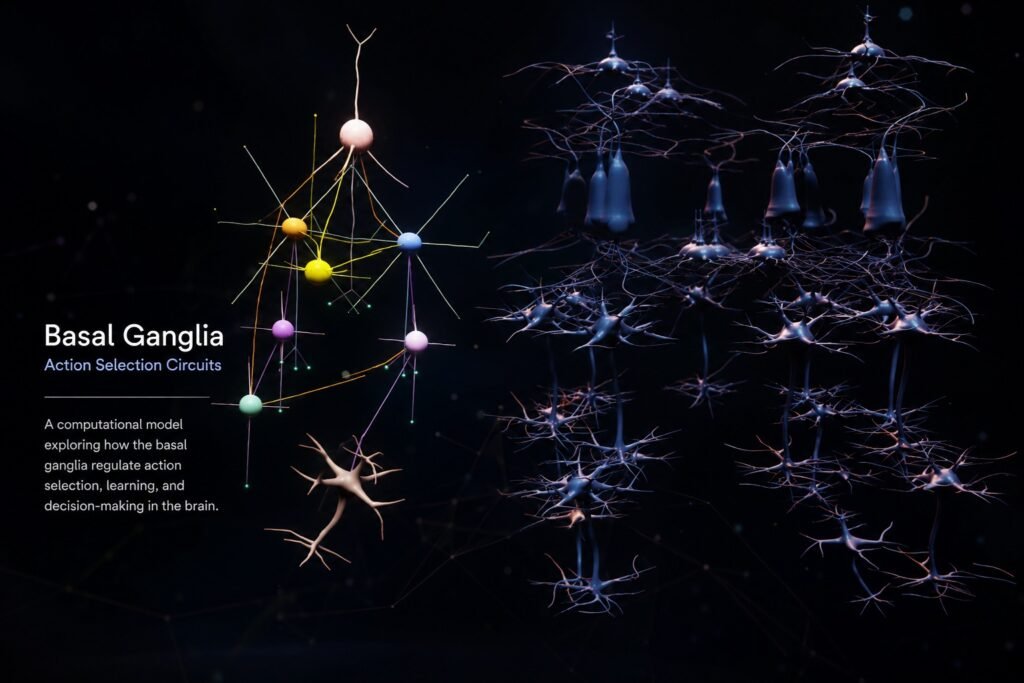
The goal of this project is to transform a complex neurological circuit into an understandable, interactive visual system. By combining neuroscience, computational modeling, and 3D visualization, the project provides an accessible way to explore how the brain selects actions and how neurological disorders may affect this process.
Using OpenUSD, NVIDIA Omniverse, and Blender, this project explores how different neurological variables can be represented through dynamic 3D simulations. I see this type of work as a step toward more advanced models of brain function… tools that could support scientific discovery, improve our understanding of neurological disorders, and contribute to better health and quality of life for millions of people.