
Visualizing a neural circuit
This project explores a minimal neural circuit as a foundation for visualizing how signals propagate through interconnected systems. The simulation begins with a single neuron receiving an input pulse and transmitting it to one of two possible output neurons, with the routing decision controlled programmatically. By replicating this simple structure across the scene, the system scales into a larger network where multiple neurons activate and transmit signals simultaneously. Light is used as a visual metaphor for neural activation, creating an intuitive and dynamic representation of parallel signal flow.
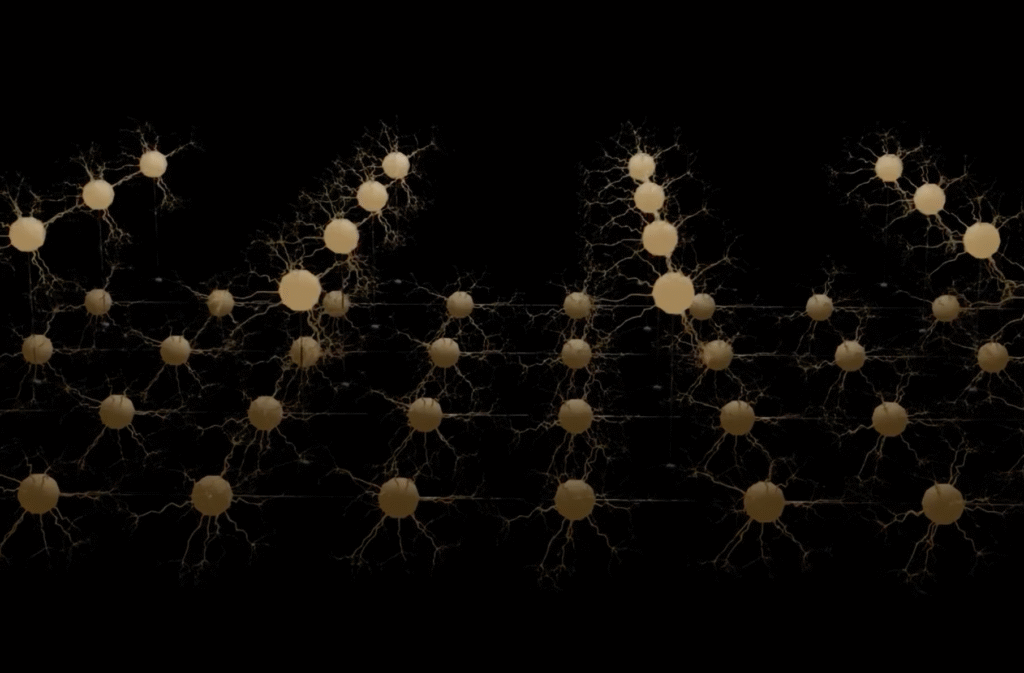
The model was built using OpenUSD to structure the scene and manage reusable components, allowing efficient replication and composition of neuron units into a larger network. Animations and signal propagation logic were implemented through scripted control, enabling precise timing and routing of pulses across the system. This project focuses on clarity and modularity, serving as the first step in a broader series aimed at simulating increasingly complex neural circuits and translating neuroscience concepts into visual, interactive systems.