
Autonomous Greenhouse
Building a greenhouse that can see, reason, and act — a simulation-first exploration of physical AI, plant perception, remote operation, and robotics.
What if the greenhouse itself could become intelligent?
I started by building a greenhouse digital twin: a simulated environment where climate, irrigation, ventilation, sensors, actuators and robotic systems can coexist. Instead of treating automation as isolated devices, the greenhouse becomes one connected system that can be observed, tested and controlled before touching the physical farm.
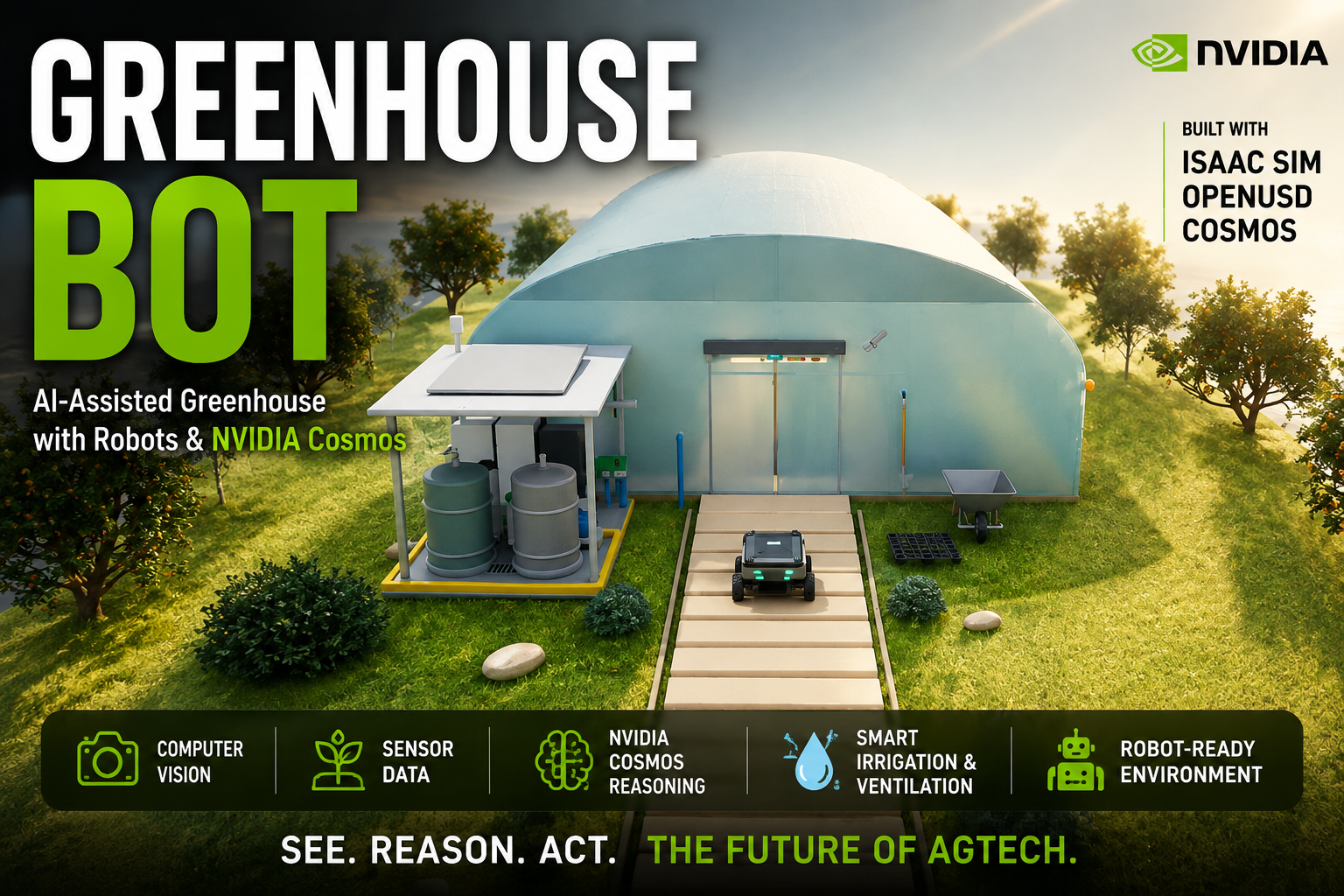
What if I could operate it from anywhere?
The project then moved beyond a simulation running locally. Using WebRTC, the GPU-intensive environment can run remotely while I interact with the greenhouse from another device. This creates the foundation for remote visualization and control of irrigation, ventilation, environmental systems and future robotic components.
Now the greenhouse needs to see.
The next experiment focuses on plant perception. I am building procedural crop variations and synthetic datasets that represent healthy and unhealthy plants from the perspective of a greenhouse inspection camera.
The challenge is not simply generating more images. The simulated data needs to reflect the real environment: camera position, plant spacing, occlusion, lighting, healthy and unhealthy ratios, and the variation the perception system will actually encounter.
Simulate the problem before the robot encounters it.
Procedural plant assets let me deliberately create variation, stress conditions and visual edge cases, then study how those choices affect the data used to train perception systems.
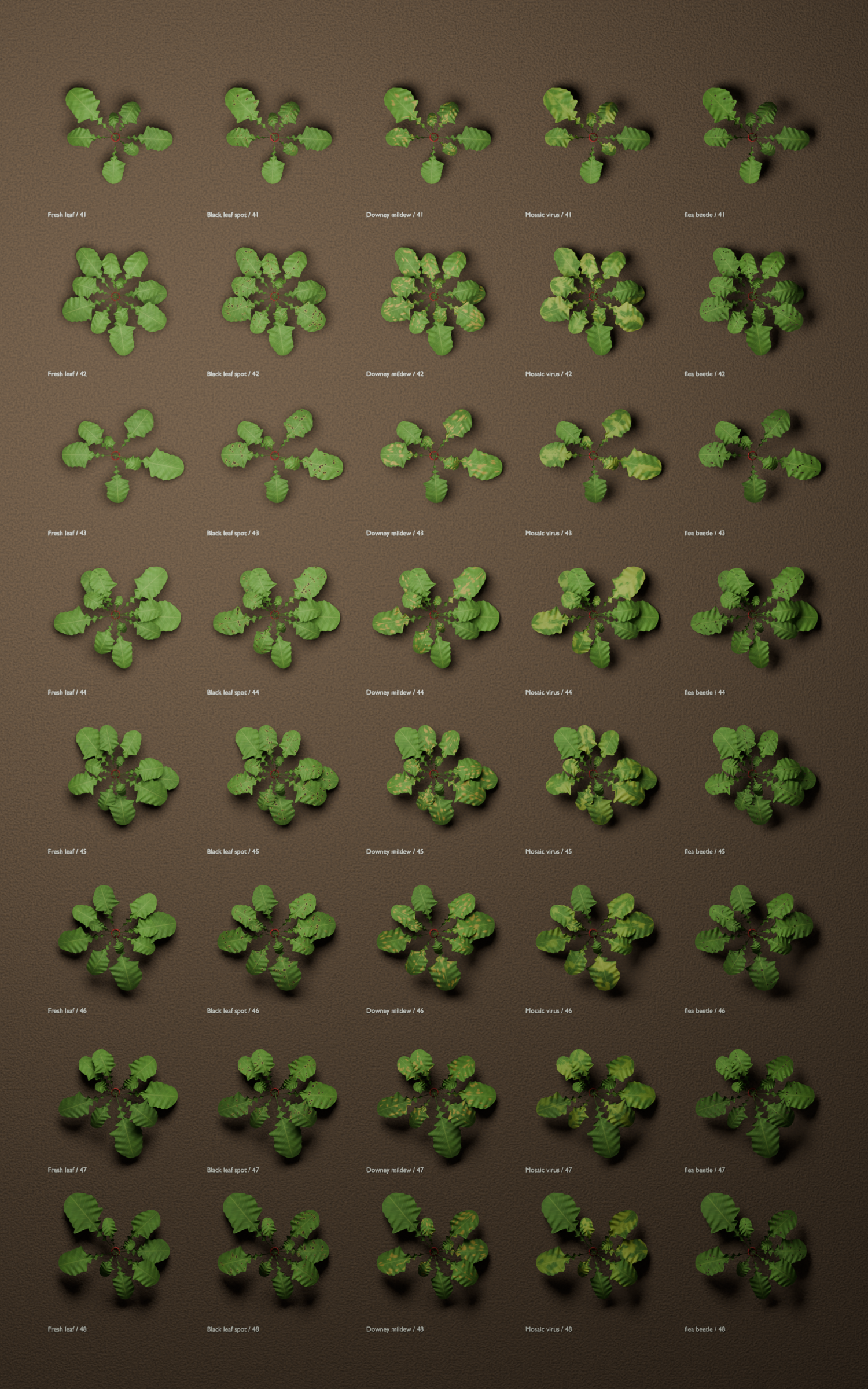
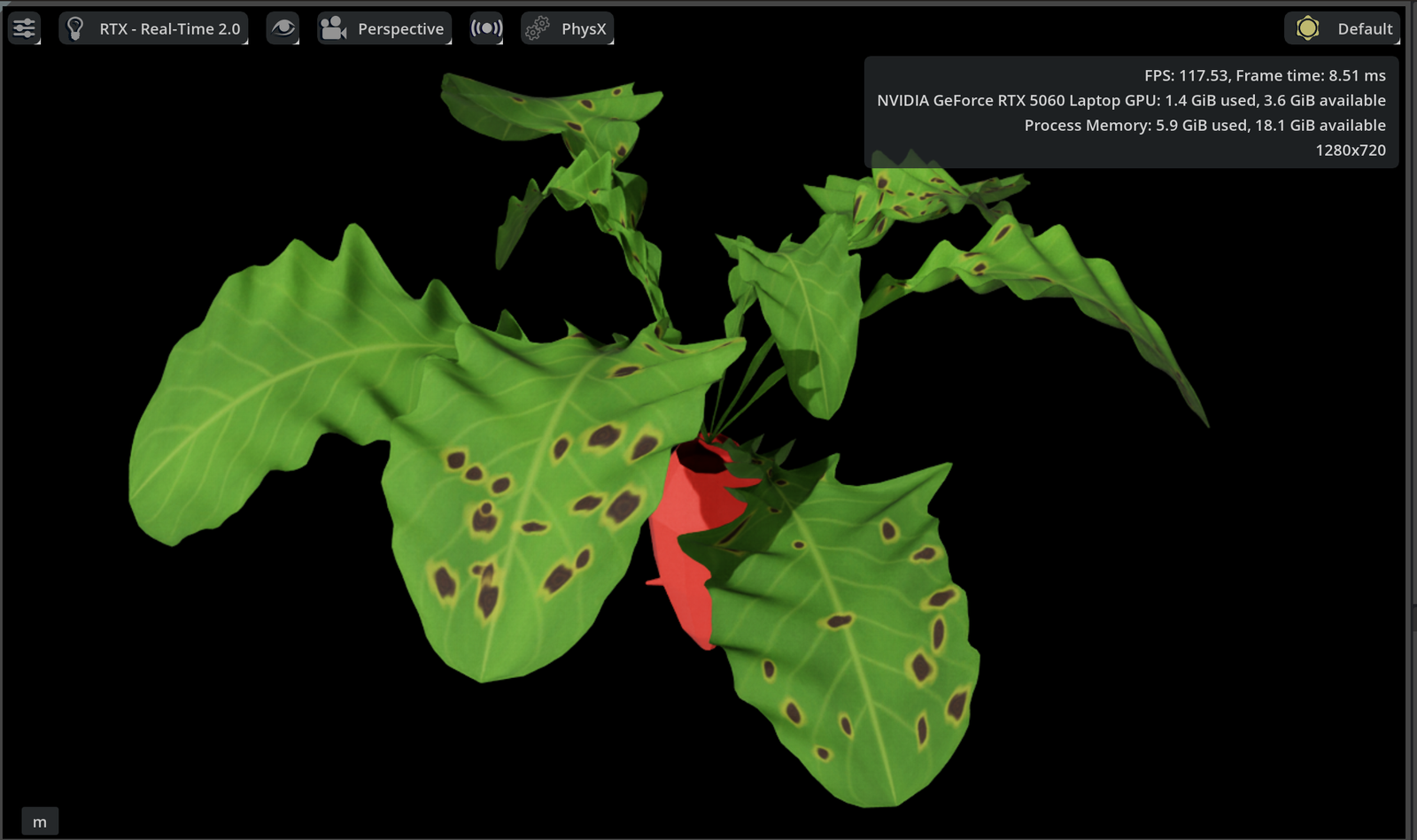
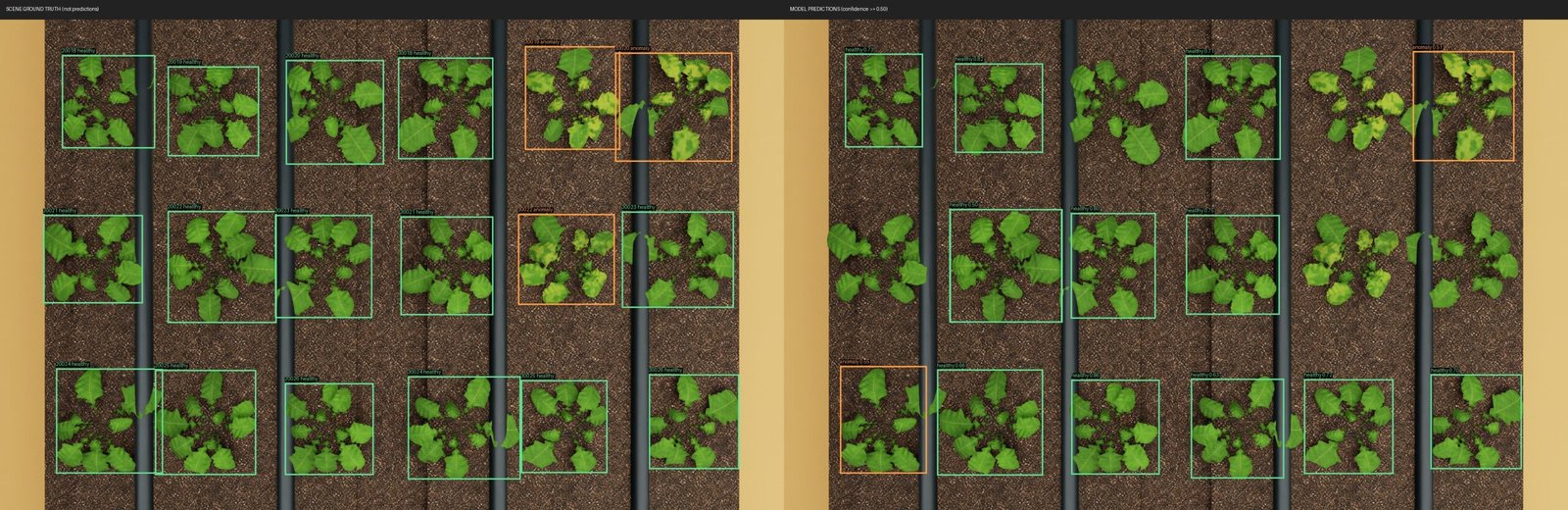
The goal is to connect these layers into one physical-AI system: a real greenhouse mirrored by a digital twin, receiving environmental and visual data, reasoning about what it observes, and eventually enabling robots to inspect and manipulate plants.
Want to see how it works?
This page tells the story. The technical case study goes deeper into the simulation architecture, OpenUSD, Isaac Sim, Python, NVIDIA Cosmos, WebRTC, synthetic-data pipeline, procedural assets, sensors and actuators, experiments, and lessons learned.
Technical case study