
Modeling how THC modulates neural signaling through CB1 receptors
This project simulates the interaction between THC and CB1 receptors within a glutamatergic neural circuit modeled in the amygdala, a region associated with stress and emotional processing. The visualization begins with a baseline state, showing the normal flow of glutamate across the circuit. It then transitions into a stress condition, where signal activity becomes amplified, representing an overflow of excitatory transmission. Finally, the simulation introduces THC, which binds to CB1 receptors and modulates the system, reducing the intensity of the signal and restoring a more balanced state.
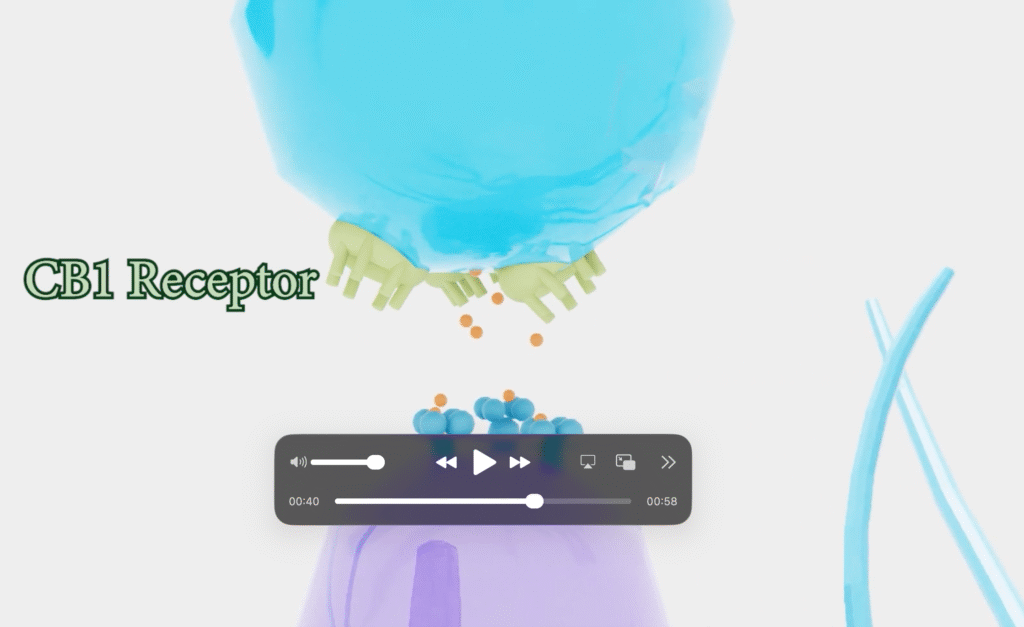
Built using OpenUSD, this model focuses on translating complex neurobiological mechanisms into a visual and intuitive system. The simulation abstracts synaptic activity into light-based signals, allowing viewers to observe how modulation occurs in real time. Beyond the technical implementation, this project reflects an interest in the intersection between neuroscience, technology, and natural compounds—highlighting how understanding brain function can offer insights into regulation, balance, and the role of plant-based molecules in human physiology.